
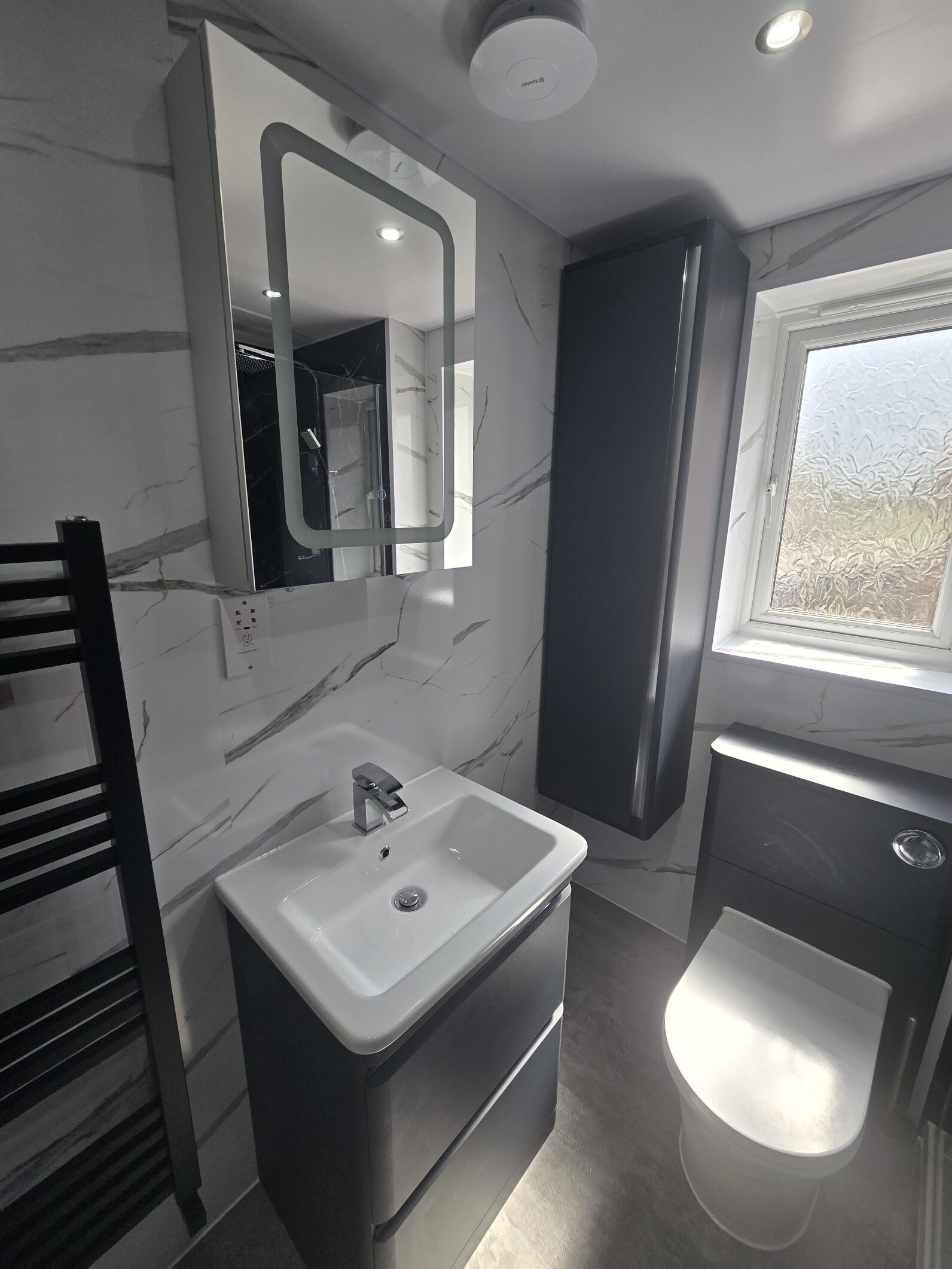
After 20+ years in the trade and 60+ bathrooms installed personally, I made two decisions:
- I stopped installing ceramic tiles — too slow, too expensive to fit, and grout fails years before the tile does.
- I stopped installing UPVC bathroom panels — too flimsy, hollow inside, dents and traps moisture.
Both decisions cost me jobs. Both decisions also made my customers happier. Here’s the honest comparison from someone who’s fitted all three.
On this page
- The three options at a glance
- What each one actually is
- What goes wrong with each (the honest version)
- Why most installers won’t tell you this clearly
- 5 questions to ask any bathroom installer
- What T40 gives you
- What a T40 SPC bathroom takes
- Get a free quote
- Quick FAQ
- A note on terminology — PVC, UPVC, PVCu
The three options at a glance
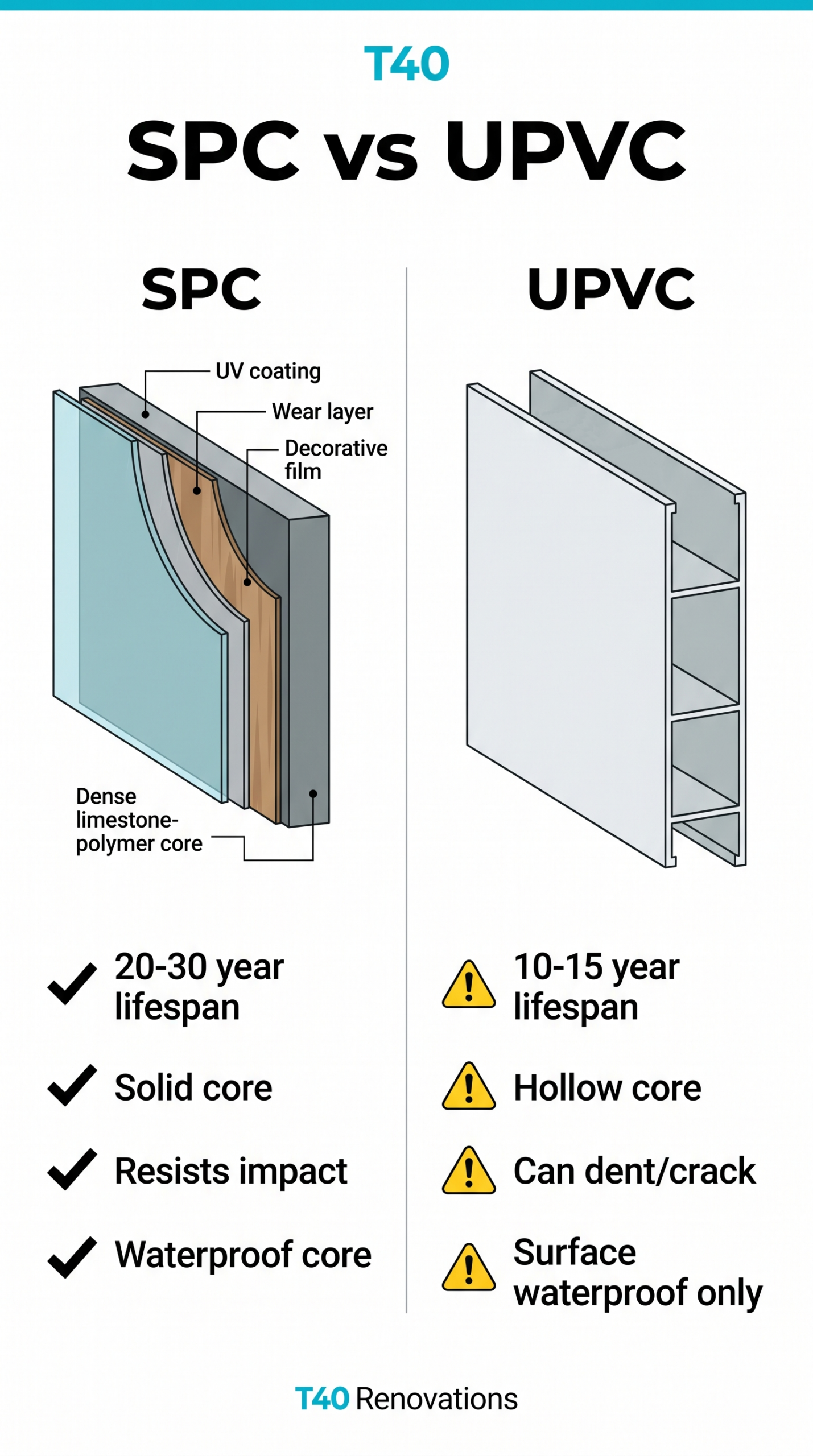
SPC for the home you’ll live in. UPVC for budget short-term. Ceramic tiles only if the tradition matters more than the install cost and the grout problem.
Quick comparison below. Below that — what each one actually is, and how each one fails in the long run.
| SPC Panels | UPVC Panels | Ceramic Tiles | |
|---|---|---|---|
| Core | Solid stone-polymer | Hollow plastic | Solid clay |
| Install time (walls only) | ~1 day | 1–2 days | 3–4 days |
| Material cost | Higher upfront | Cheapest | Mid-to-high |
| Total install cost vs SPC | Baseline | Cheaper | ~30–50% more |
| Lifespan | 20–30+ years | 10–15 years | 50+ years (tile) / 5–10 (grout) |
| Maintenance | Wipe clean | Wipe clean | Grout sealing, mould cleaning |
| Impact damage | Resists dents | Dents and cracks | Cracks under impact |
| Waterproof | Inorganic core, fully waterproof | Surface only — hollow traps moisture | Tile yes, grout joints leak over time |
| Best for | Forever home | Short-term / rental | Heritage / traditional aesthetic |
What each one actually is
SPC (Stone Polymer Composite) — rigid wall panels made from limestone powder pressed with PVC resin and stabilisers. Solid through. Tongue-and-groove install, no grout, glued to a prepared wall.
UPVC bathroom panels — extruded hollow plastic profiles (the same material as window frames). Lightweight, cheap, fitted over existing walls in most cases.
Ceramic tiles — fired clay tiles bonded with adhesive to a prepared substrate, with grouted joints between each tile and silicone at corners and trays.
What goes wrong with each (the honest version)
Ceramic tiles fail at the grout, not the tile
Tiles themselves can last 50+ years. The problem is everything around them. Grout cracks within 5–10 years on a hard-working bathroom wall. Once cracked, it mildews, then leaks. Then you’ve got water in the substrate behind tiles you can’t easily lift.
The other ceramic problem is install cost and time. 3–4 days minimum for walls only. Labour rates £20–£40 per m², plus levelling, adhesive, grouting, sealing. A standard tiled bathroom runs 30–50% more in total install cost than SPC — and that’s before the first grout maintenance trip.
UPVC panels dent, then trap water
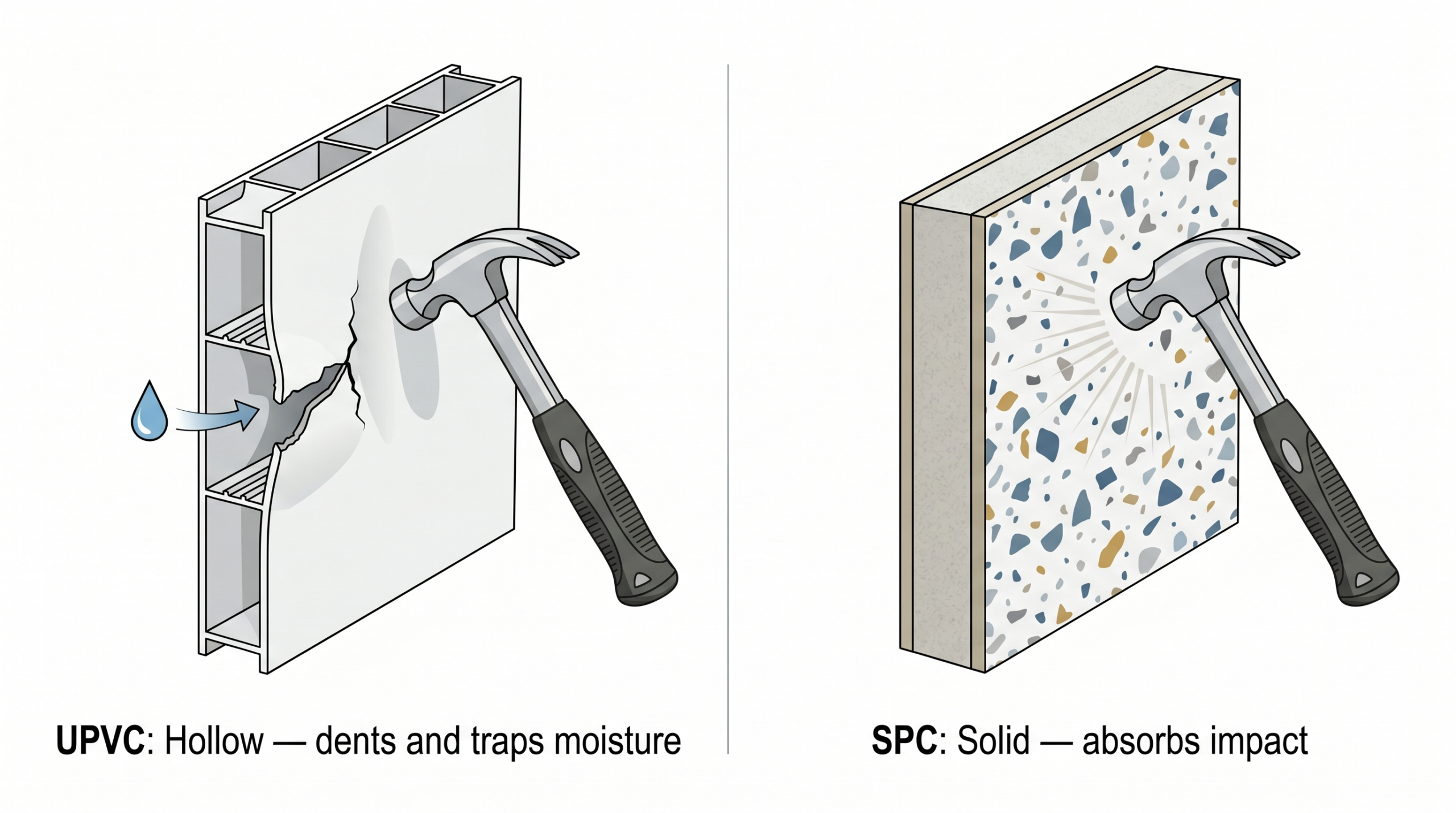
Hollow core means anything firm — shower head knock, door handle bump, elbow strike — leaves a crack or dent. The moment that crack lets water in, the hollow core fills up and sits damp. You smell it before you see it.
Most UPVC installs also skip the strip-out (that’s how the lower quote works). New panels go straight over wallpaper or old tiles. The wall behind quietly rots while the panels still look fine for a few years.
SPC — what doesn’t go wrong (and what to watch for)
Solid limestone-polymer core means no hollow space to trap moisture. No grout joints to fail. Won’t dent from impact. Lifespan 20–30+ years installed properly.
The honest catch: SPC needs a properly prepared substrate. If your installer panels over old wallpaper or damp plasterboard, even SPC can’t save the wall behind it. The material is right — the install method has to match.
Why most installers won’t tell you this clearly
A bit of margin honesty. Most bathroom installers in the UK make their best margin on one specific product they buy at wholesale and fit at retail. For many local installers that’s UPVC (own-brand, high mark-up). For traditional fitters it’s ceramic tile labour (more days on site = more invoice).
SPC doesn’t sit in either margin model — it’s a specialist material from specialist suppliers, with thinner installer margin per job. That’s why it doesn’t get pushed as the default.
T40 only installs SPC. Smaller margin per job — but the install method matches the material I want in people’s homes.
Want SPC done properly? Free in-home quote, no obligation.
5 questions to ask any bathroom installer
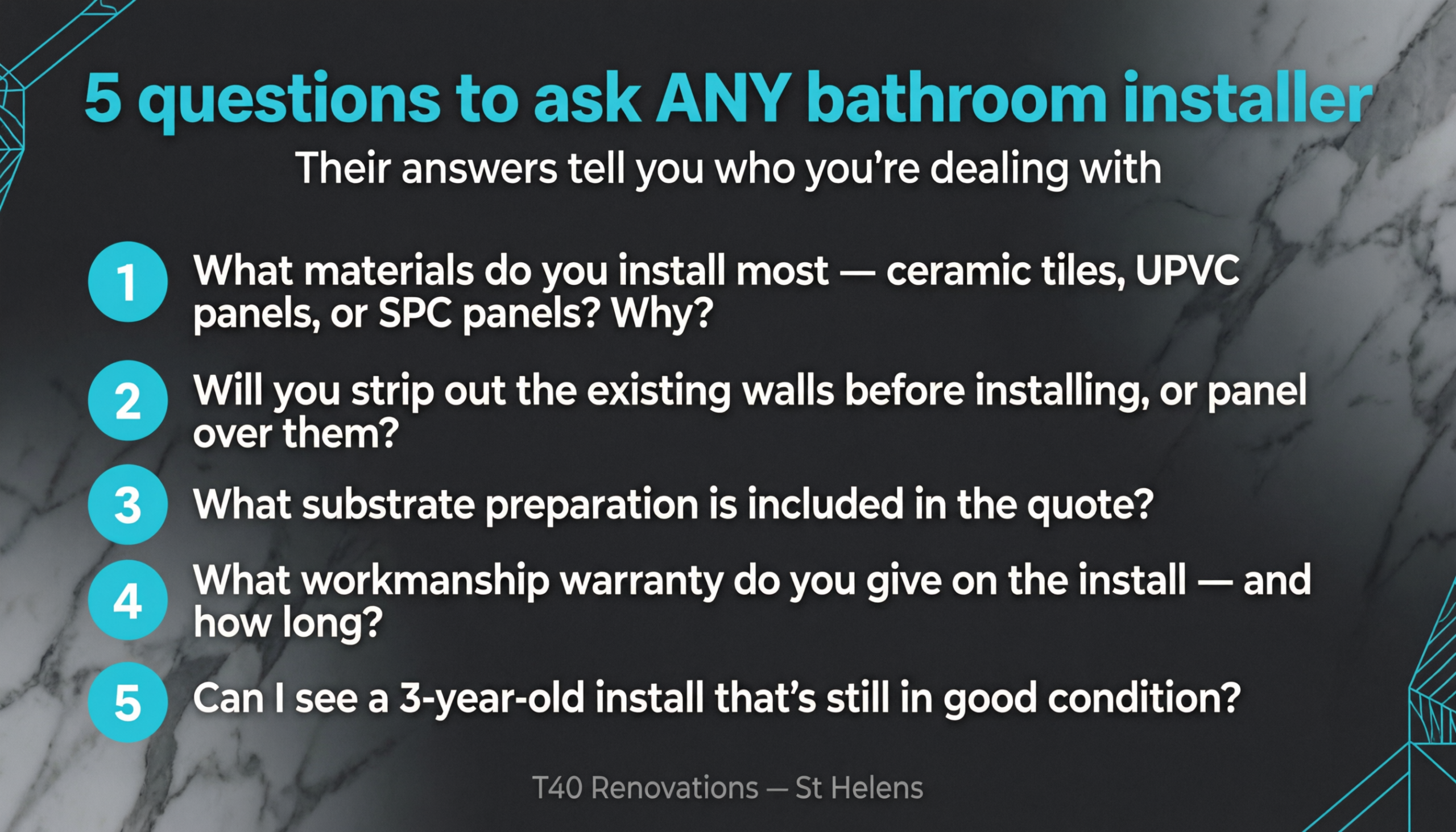
Use these on any quote — including mine. The answers tell you who you’re dealing with.
- What materials do you install most — ceramic tiles, UPVC panels, or SPC panels? Why that split?
- Will you strip out the existing walls before installing, or panel/tile over them?
- What substrate preparation is included in the quote?
- What workmanship warranty do you give on the install — and how long?
- Can I see a 3-year-old install you did that’s still in good condition?
A real installer answers all five comfortably. On question 4 specifically — ask for the warranty length in writing (typically 12 months for a UK bathroom install). A vague answer is a red flag.
What T40 gives you
- 12-month workmanship warranty on the install — written into the contract (Section 7)
- Full contract terms in writing — Companies House registered, no hidden small print
- Written after-care guide at handover — how to look after your bathroom for the long run
One contractual warranty I stand behind personally — in writing, before you sign.
What a T40 SPC bathroom takes
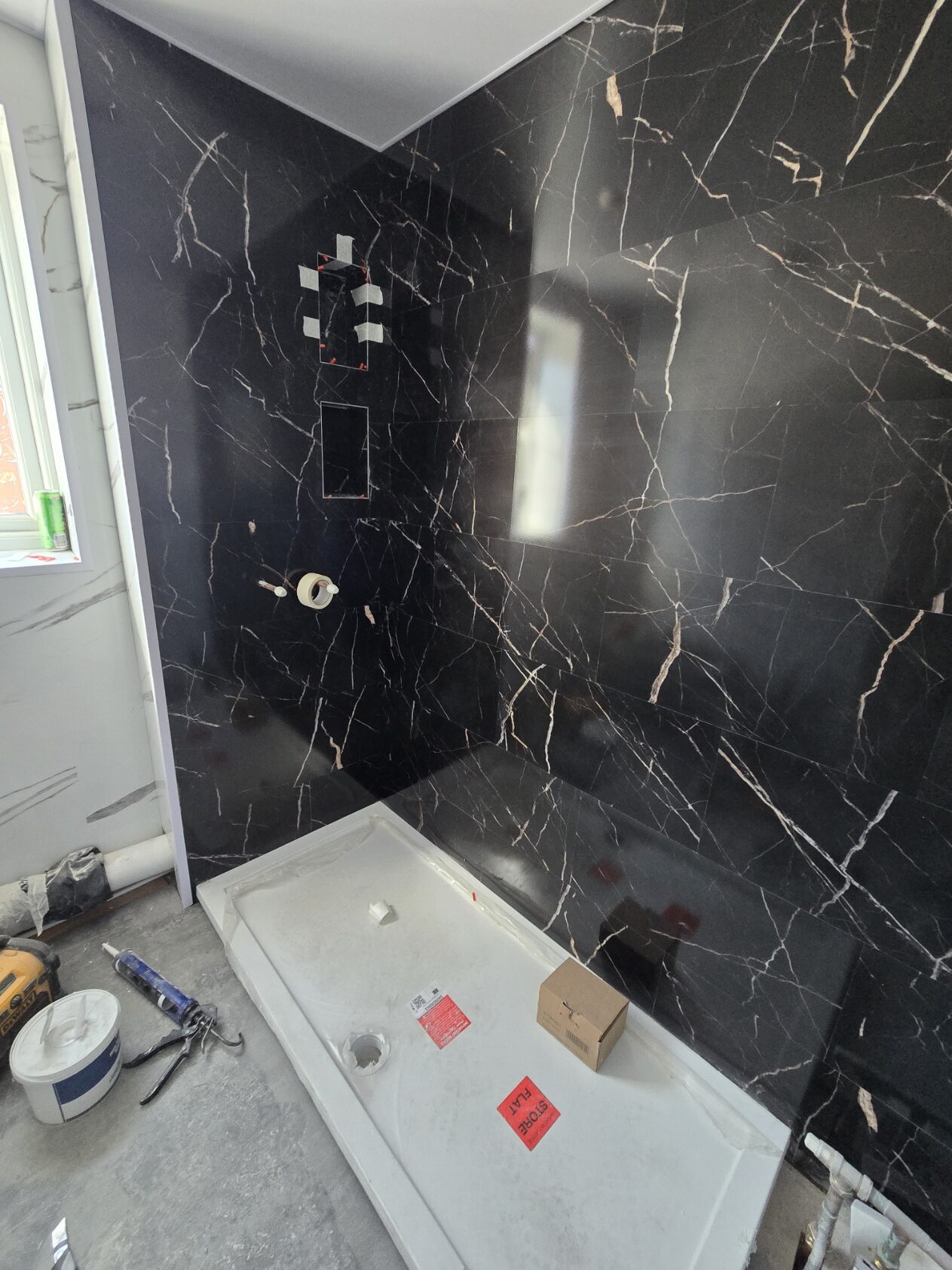
- Time on site: 5–10 working days for most full refits (vs 12–14 days for an equivalent tiled bathroom)
- What’s included as standard: strip-out, substrate prep, SPC walls, WPC or LVT floor, plumbing, electrics, fixtures install, full clean
- Exact price: quoted after a free in-home consultation — depends on size, fixtures, and bespoke joinery. Typically 30–50% less than the equivalent tiled bathroom.
No surprise extras after you’ve signed.
Get a free quote
I install SPC bathrooms across St Helens, Prescot, Wigan, Runcorn, Ormskirk, Warrington, Liverpool, and Burscough.
Quick FAQ
SPC panels last 20–30+ years installed properly. Ceramic tiles themselves can last 50+ years — but the grout between them fails in 5–10 years. The bathroom is only as waterproof as the weakest joint.
Total install cost is typically 30–50% less than an equivalent tiled bathroom. The bulk of the saving is labour time — SPC fits in roughly a day for walls, ceramic tiling takes 3–4 days for the same area.
That used to be true. Modern SPC panels print marble, stone and wood patterns at high definition that look indistinguishable from the real thing at viewing distance. Plus the edges finish cleaner because there’s no grout to interrupt the design.
Technically yes — I won’t do it. Going over old tiles seals in any moisture, mould or movement issues you can’t see. The strip-out costs an extra half-day and saves you an expensive repair down the line.
A note on terminology — PVC, UPVC, PVCu
For anyone wondering: PVC, UPVC, and PVCu all refer to the same rigid plastic material when used for bathroom wall panels.
- PVC — the short consumer term in everyday use
- UPVC — the full trade name (Unplasticised PVC — rigid plastic with no softeners added)
- PVCu — the same material, letters rearranged (used by some manufacturers)
Flexible PVC — the soft kind used in cables, vinyl flooring, and tablecloths — is a different product. You won’t find it as a bathroom wall panel.
This article uses “UPVC” throughout for consistency. If you’ve been quoted “PVC panels” or “PVCu cladding,” it’s the same material covered above.
T40 Renovations Ltd — bathroom installer based in St Helens, serving Merseyside. 20+ years in the trade, 60+ bathrooms installed. Companies House #16317497.
